Tag: Kelowna real estate investments

  • Rom’s July Real Estate Stats & Opinion

    Rom’s July Real Estate Stats & Opinion

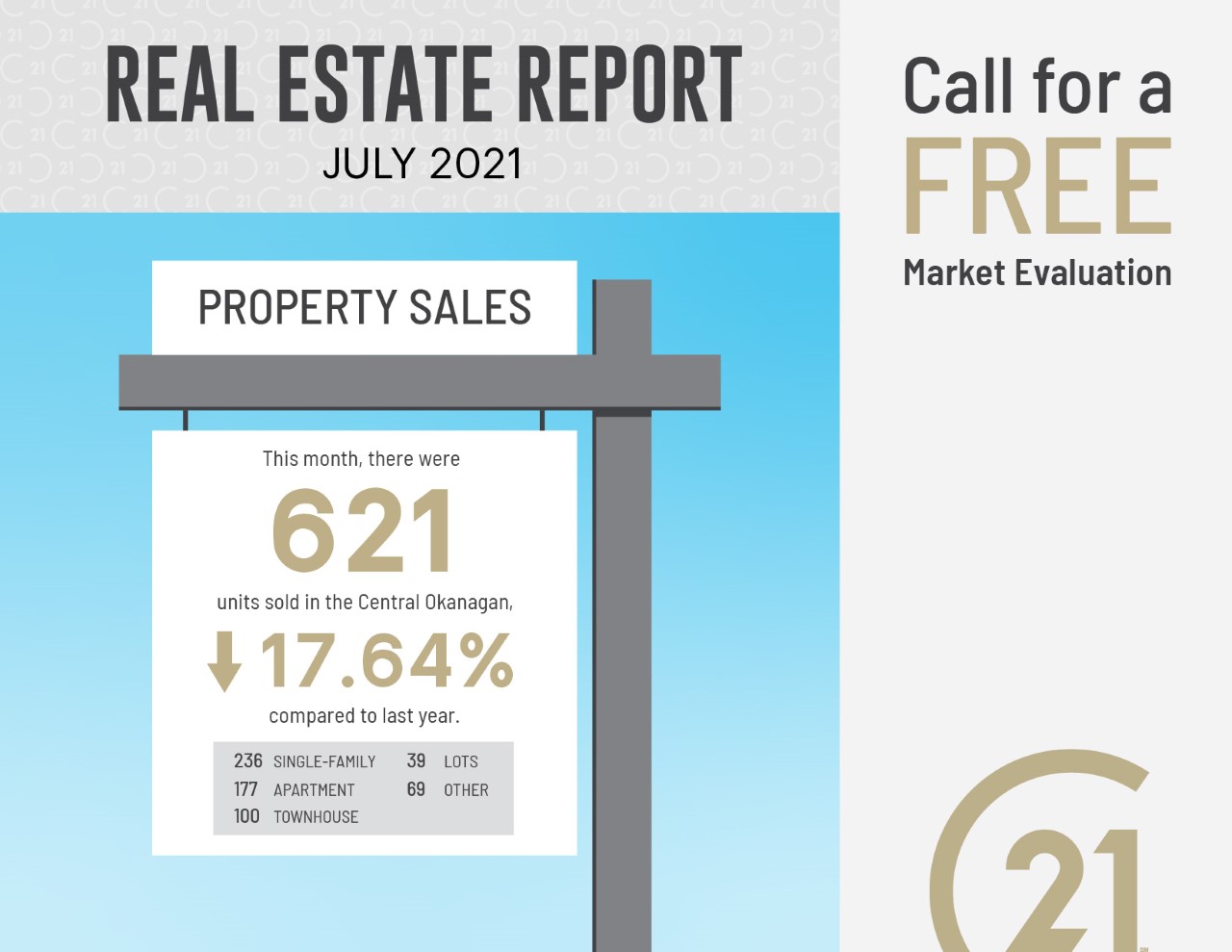
    Okanagan Real Estate Report July 2021
    Rom’s Real Estate Opinion

    The market is progressing exactly in the direction that we anticipated. Things are settling down but definitely not crashing.

    Think of the market in the last year as something like a Chicken Little scenario from the 1943 Disney Movie. For the last 6 months the market has been running around with his hands waving in the air screaming and yelling that the sky is falling. In other words, the absorption was ridiculously high, the inventory was ridiculously low, monthly sales we’re breaking all historical records and price increases we’re breaking all historical records.

    What’s happening now is Chicken Little is settling down. The absorption in the Central Okanagan (Peachland to Lake Country) has now dropped to between 40 and 50%. The inventory is still very low and sales have dropped to a reasonable level. However, let’s keep this in perspective. Absorption between 40 and 50% is still off the charts for our area. A balanced Market is considered to be 12 to 18% depending on which expert you listen to. Below 12% indicates that you can expect price decreases and it is also considered a strong buyer’s market. Above 18% is considered a seller’s market and you can expect price increases with this level of absorption. 40% is a long way above 18%…

    Where is the market going to go from here and why?

    What has to change in order for prices and sales to drop dramatically? If we look at the inventory for July 2021 and compare this with inventory levels in July 2020 and 2019 then this July inventory level is less than half the other 2 year averages.  Although over time inventory levels will typically gradually increase as more houses will be built, more construction and development. However, in order for the market to change dramatically to even approach a balanced Market the inventory has to increase dramatically; likely more than double. Is this going to happen? This is the big question.  We will not get rid of multiple offers on the same property until that inventory increases. That is just basic logic. 

    Conclusion

    I think we will see this present direction of the inventory, absorption and sales start to level off at these relatively higher levels. The market has settled down from its Chicken Little level to its “normal” place in the regular cycle. 

    If you would like to find out what your home is really worth in a market like this give me a call or text me at 250-317-6405 and I would be happy to evaluate your home. It can be done completely remotely if you prefer. It is totally free.  As always have to remember that’s just the Real Estate World according to Rom.
  • Rom’s September Okanagan Real Estate Stats and Update

    Rom’s September Okanagan Real Estate Stats and Update


    Central Okanagan

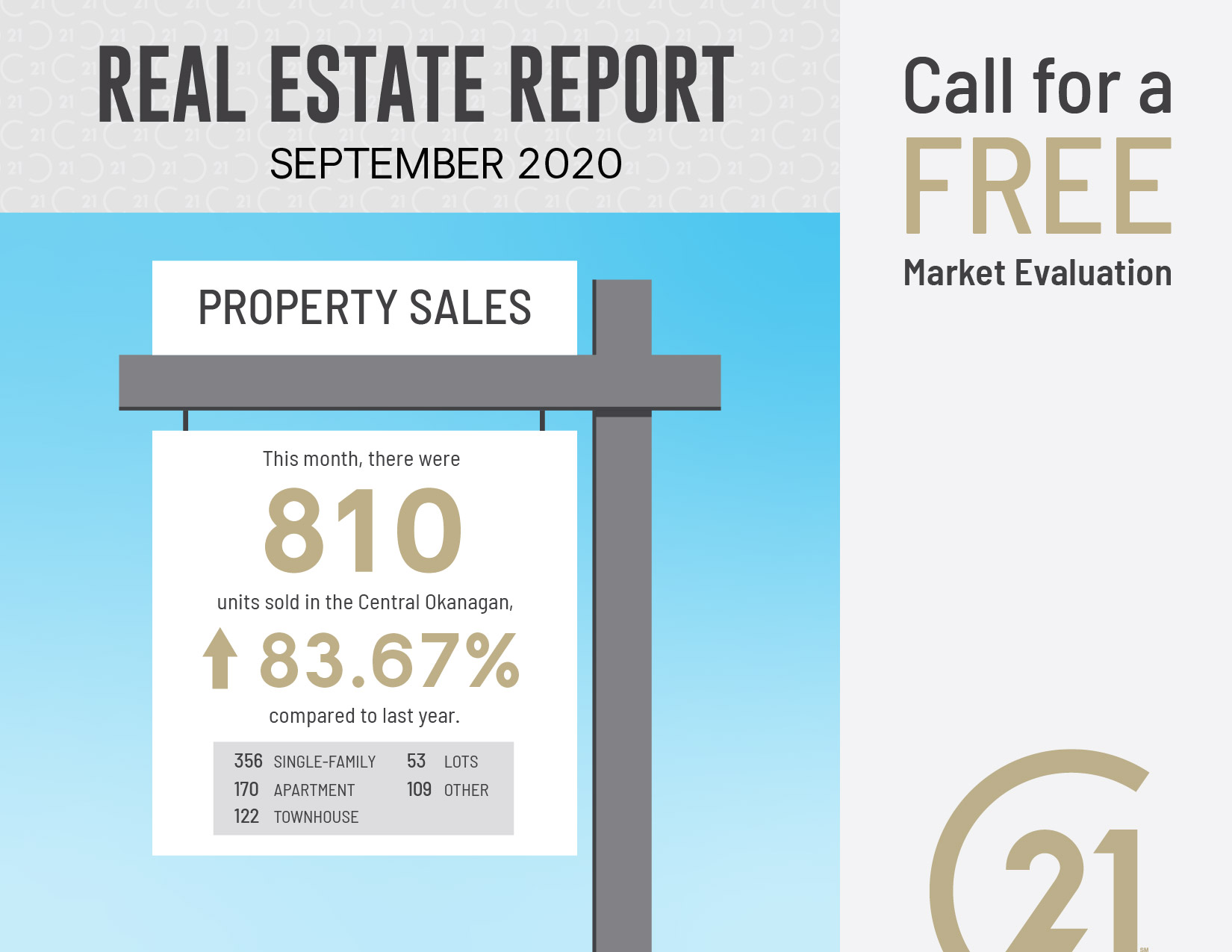
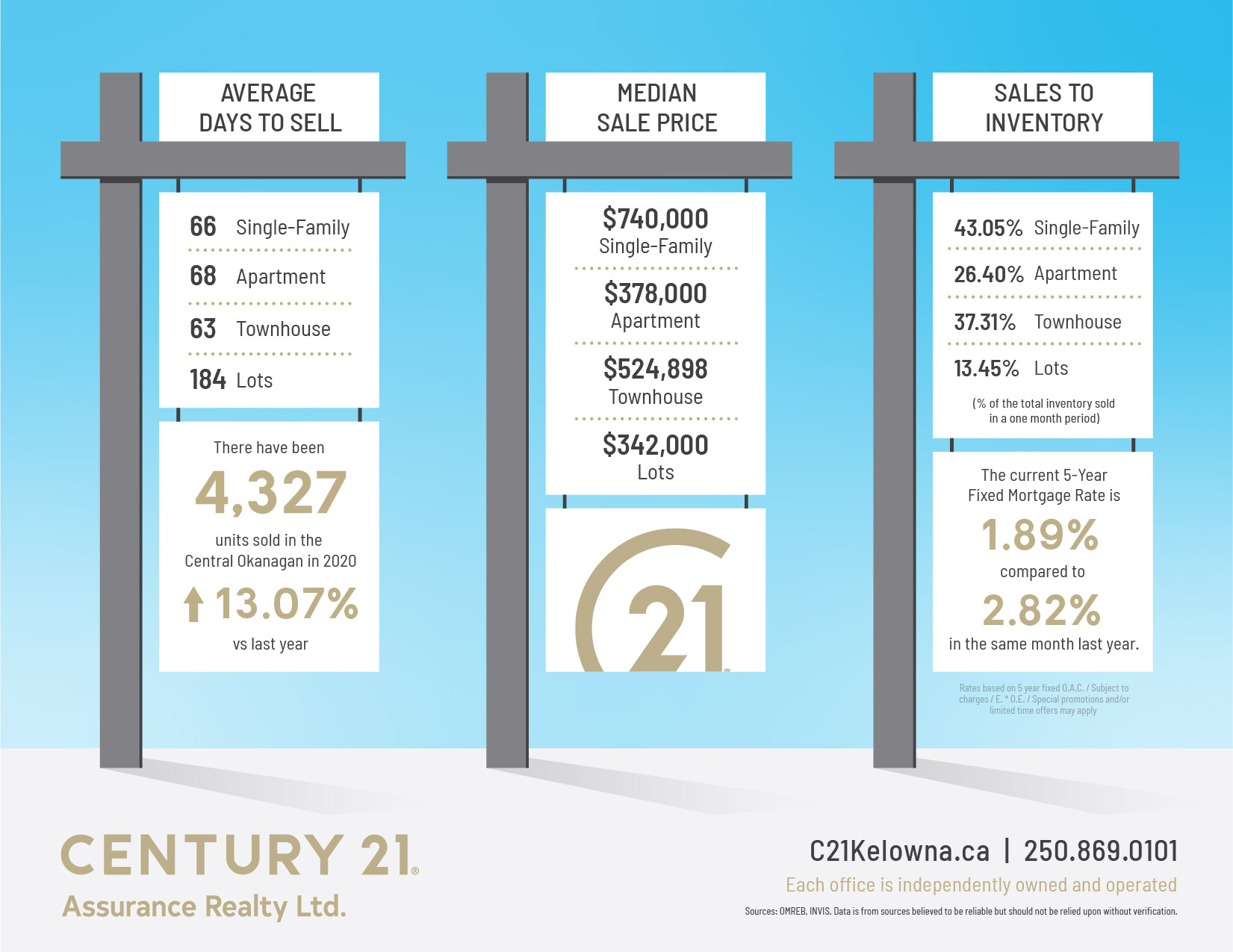
    “Unusual market activity seems to be the theme this year, although not surprising considering there is nothing normal about 2020.  The pandemic has definitely made people look at things differently.  We are seeing higher demand likely due to post-quarantine lifestyle changes.
    The Pandemic lifestyle changes (who doesn’t want to live in the Okanagan), still record low mortgage rates, very low listing inventory and a continuing migration of buyers from the Lower Mainland are driving up prices from in particular single family homes to record highs.  The Albertan buyers were only making up 7% last month, likely due to the effects of the Pandemic to the oil and gas industry.  The Benchmark home price (better representation than average or median house prices) was $710,700, up 6.3% from September 2019!  It is also remarkable that the sales activity in the one million and up range tripled this year.
    It is interesting to note that the largest type of Buyers are couples without children (29%) last month, followed by couples with children (24%), see graphic. This led me to believe that more semi-retired and retired couples aremoving and purchasing in the Kelowna area.  Overall, 41% of all the buyers were out of town buyers!  Also noticeable is the large amount of first time home buyers last month, 24% of all the buyers.
    The average number of days to sell a home, always a good barometer to watch, barely nudged over August’s 89 days, coming in at 90 days.

    634.jpg

    BC Overall market

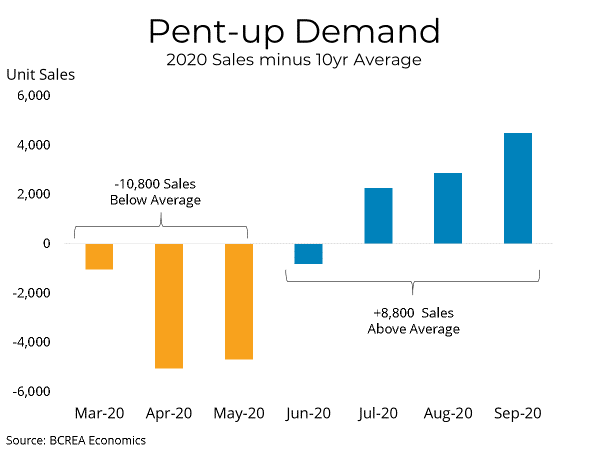
    The British Columbia Real Estate Association (BCREA) reports that a total of 11,368 residential unit sales were recorded by the Multiple Listing Service® (MLS®) in September 2020, an increase of 63.3 percent from September 2019. The average MLS® residential price in BC set a monthly record of $803,210, a 15.3 percent increase from $696,647 recorded the previous year. Total sales dollar volume in August was $9.1 billion, an 88.3 per cent increase over 2019.
    chart

    “The provincial housing market had a record-setting September,” said BCREA Chief Economist Brendon Ogmundson. “Both total sales and average prices were the highest ever for the month of September as pent-up demand from the spring pushes into the fall.”

    “Average prices are skewing higher as demand for space during the pandemic drives sales of single-detached homes,” added Ogmundson. Total provincial active listings are still down about 12 per cent year-over-year, with some markets even more under-supplied as the pandemic continues to keep listings low.  Year-to-date, BC residential sales dollar volume was up 25.1 per cent to $49.7 billion, compared with the same period in 2019. Residential unit sales were up 12.5 per cent to 65,023 units, while the average MLS® residential price was up 11.2 per cent to $764,298.

    As always, this is just the Real Estate World according to Rom.
  • Rom’s Real Estate Opinion April 2020 during COVID-19

    Rom’s Real Estate Opinion April 2020 during COVID-19

    The Real Estate Market During the COVID-19 Pandemic

    There is no doubt that the COVID-19 pandemic has made a big impact in the lives of everyone around the world. The way we live our day to day lives has changed drastically; from how we get our groceries to being able to see our family and friends. The real estate market is no different. However, people still have the need to buy and sell homes, even during these challenging times.

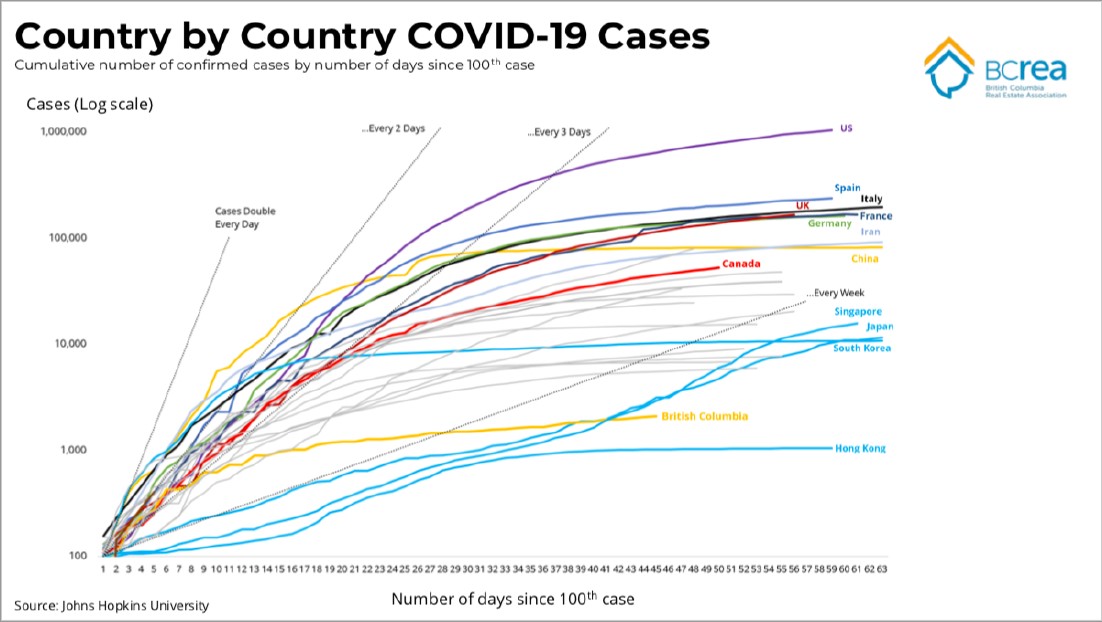
    I want to start off by sharing a few visuals. Please click the images to englarge them. The first is Country by Country COVID-19 cases. I want to point out how well BC is doing on flattening the curve, even when comparing to the rest of Canada.

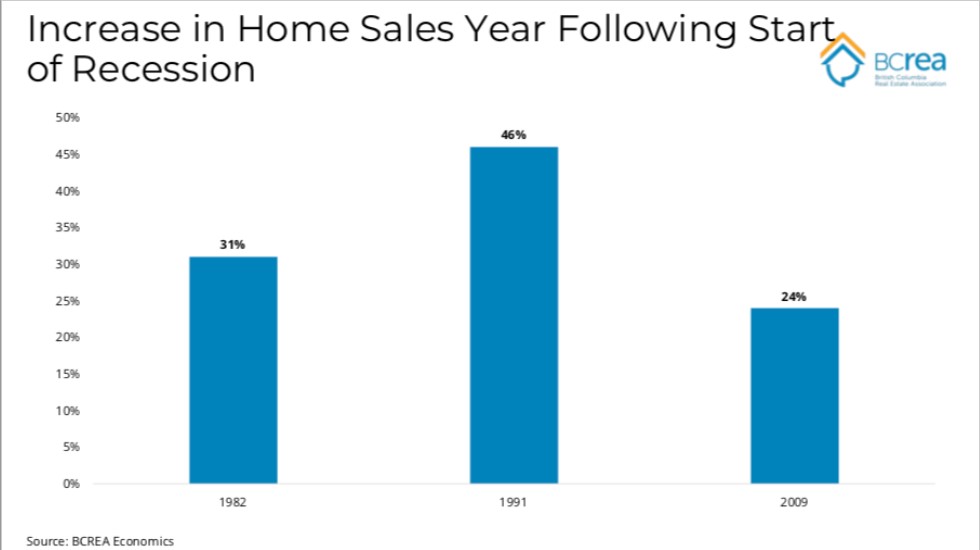
    Next I want to share some graphics on home sales and home prices in past recessions. In April, single family homes were actually still up by 4% compared to April 2019. Factor in low rates that we likely wont see again, it is actually a great time to purchase a home.
    Jean-Francois Perrault, SVP & Chief Economist of Scotiabank stated the following, “We view the housing market to be on a COVID-related pause. Following a dramatic slowing in Canadian housing markets in 2020Q2, we anticipate a quick rebound in home sales and housing starts through 2021 if population growth remains strong, and the economy improves in the second half of the year”.

    April 2020 Okanagan Real Estate Report

    In real estate, we track 5 stats that are the best indicators of what’s going on in the residential market. Those stats are sales, DOM (days on market to sell), inventory, absorption (% of inventory that sells each month), and prices.

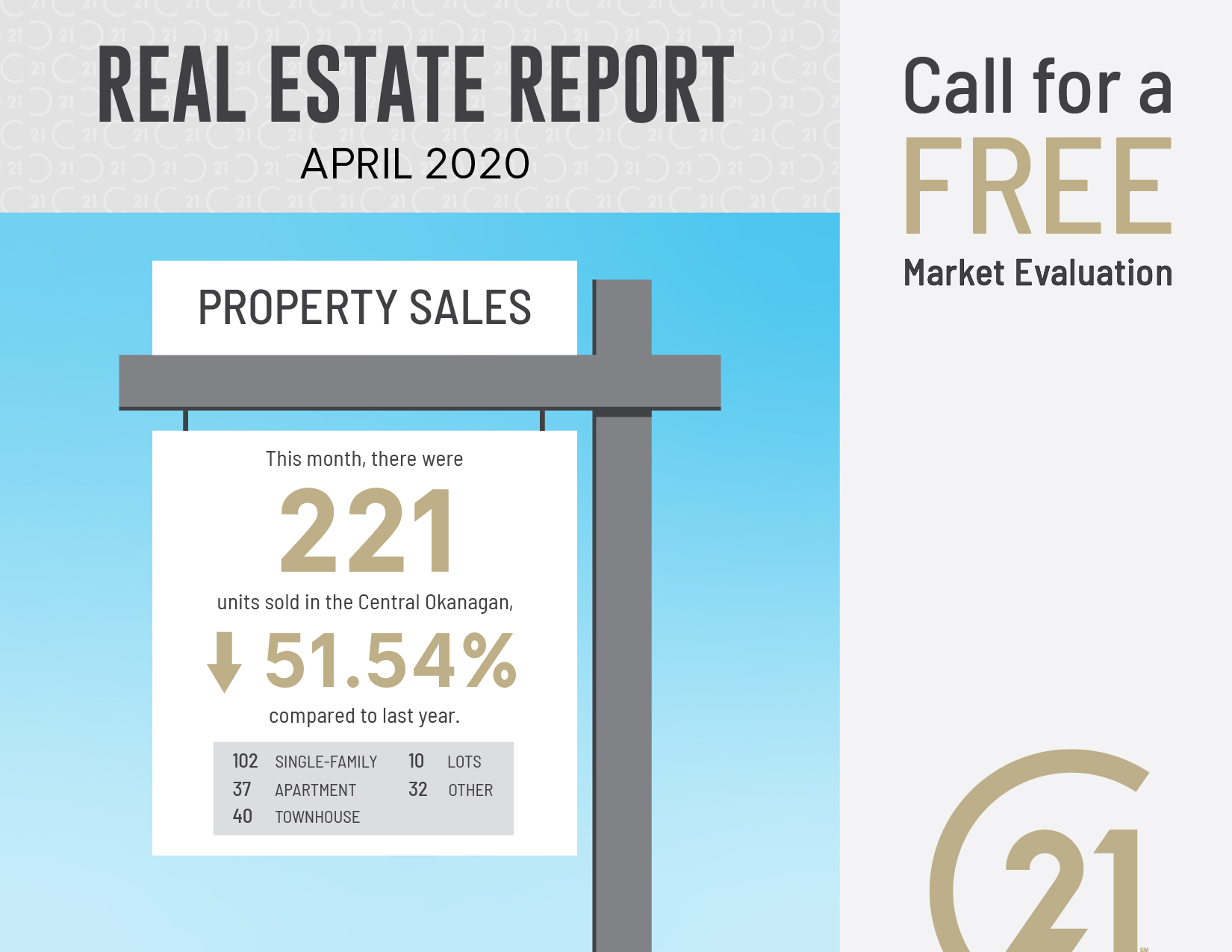
    Sales and absorption are the first stats to change. They are both down 50-60% compared to April 2019. This is normally the time the market would be ramping up for spring.

    The stats also illustrate a significant factor that we discovered years ago about how a market goes through its changes. This is that the prices are always the last stat to change. April’s statistics show exactly this. Prices have essentially not changed.

    If we look back to the recession of 2008, sales and absorption began to drop right in the first quarter. However, prices remained stable and/or continued to rise. We are seeing the same right now with house prices actually up 4%, yet condo prices are down 4%. I expect the prices of condos to lower further this year. House prices may lower as well but not as much as condos will.

    Conclusion

    Although the last stat to be typically affected by a recession/pandemic is the price, it may have a short term effect on lower house prices. Although, we haven’t see this happen yet.

    We will soon come to know our new ‘normal’. Businesses will reopen, consumers will regain their confidence and the real estate market will rebound. This could be as early as this Fall.

    However, I do believe that condo prices in the Kelowna area will continue to dip due to ample new construction.

    As always, this is just the Real Estate World According to Rom.

  • KELOWNA CONDO CLOSE TO DOWNTOWN!

    KELOWNA CONDO CLOSE TO DOWNTOWN!

    FOR SALE: 205-1125 BERNARD AVE, KELOWNA, BC$289,800

    PRICE REDUCED!

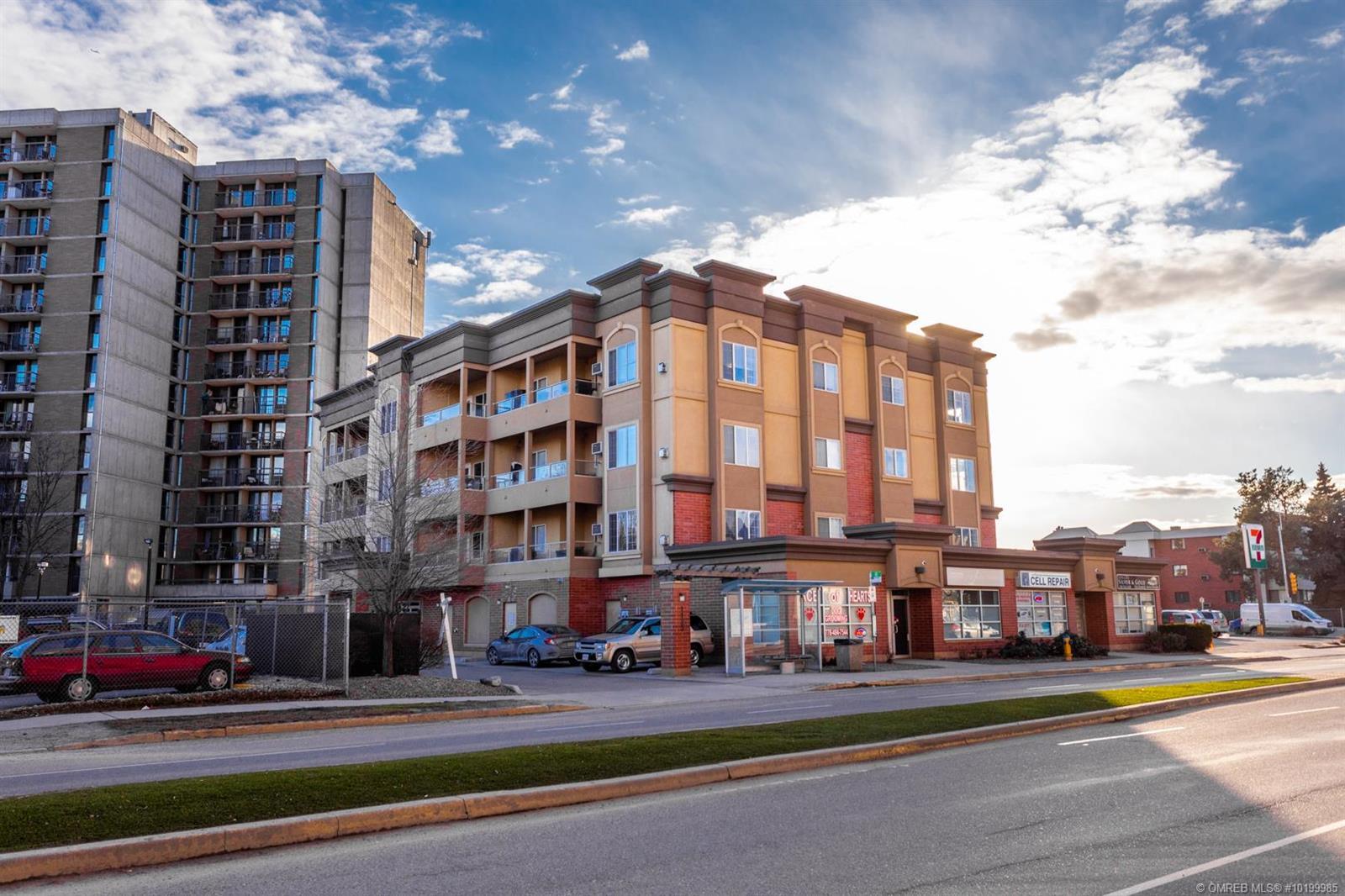
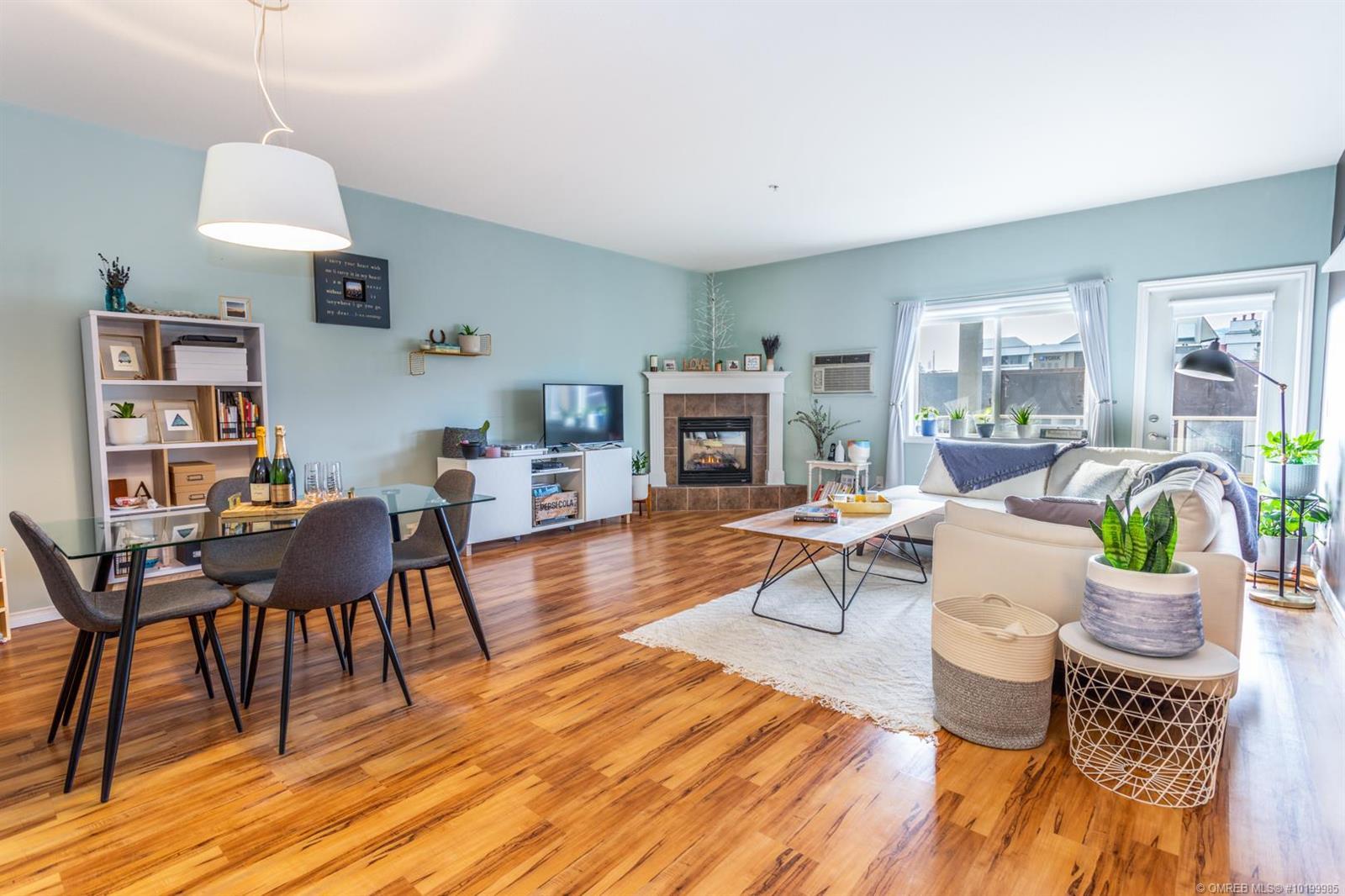
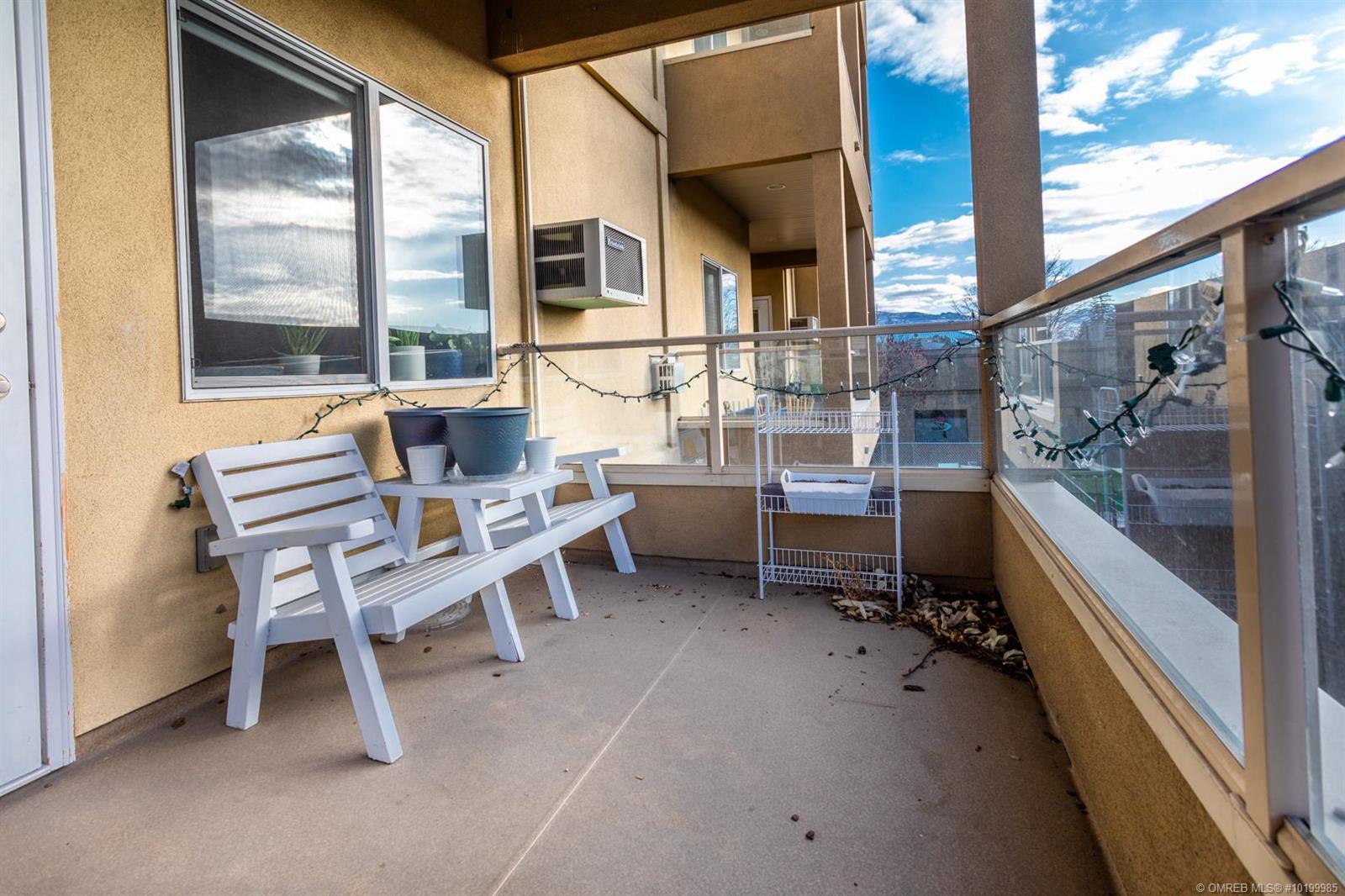
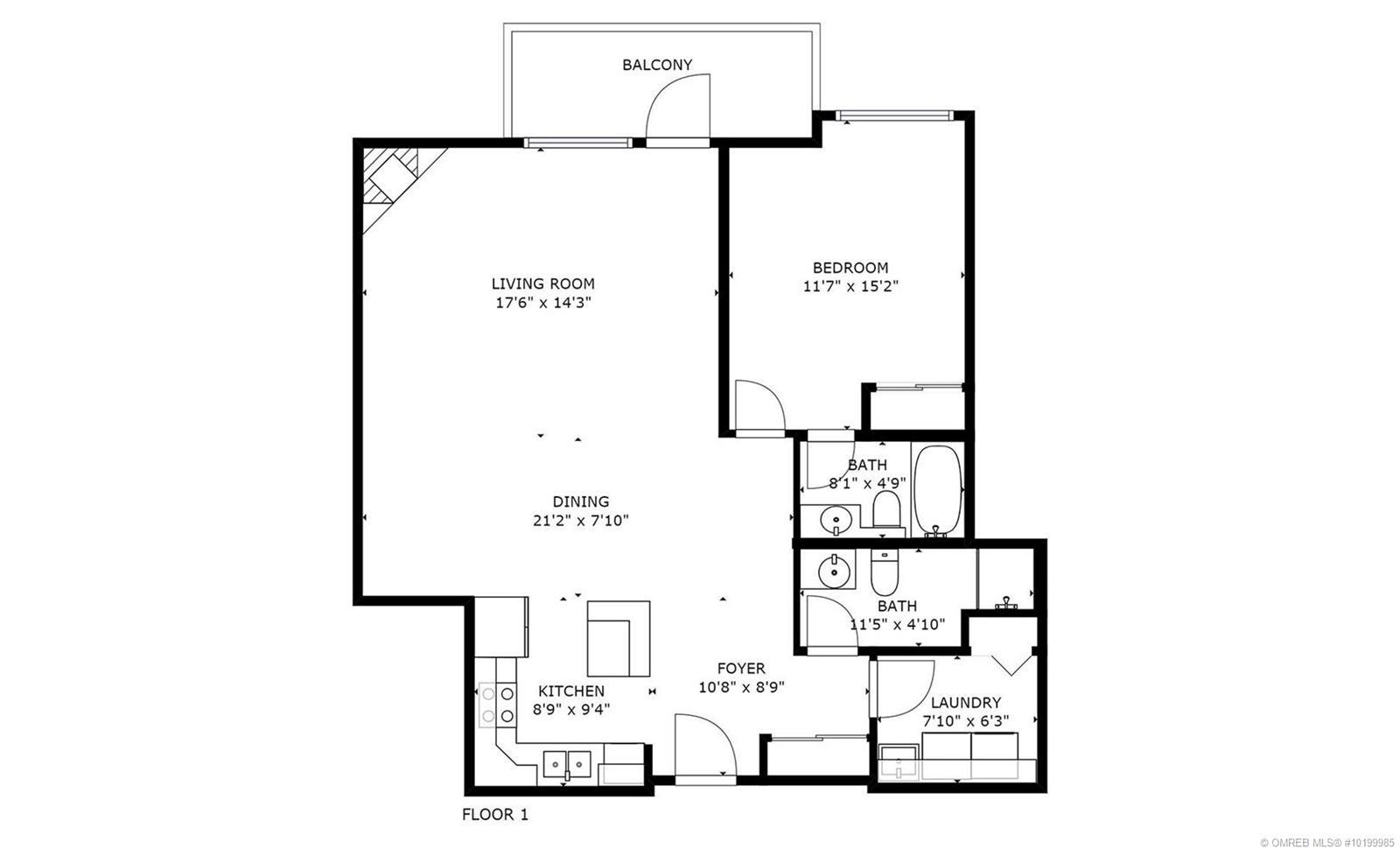
    Spacious and inviting one bedroom, two bathroom condo close to downtown Kelowna. This large condo features 9’ ceilings and an open floor plan kitchen, dining and living space complete with nice laminate flooring and a cozy fireplace. Just off the living room is a large outdoor deck with excellent privacy. The master bedroom features brand new carpet and its own ensuite bathroom.

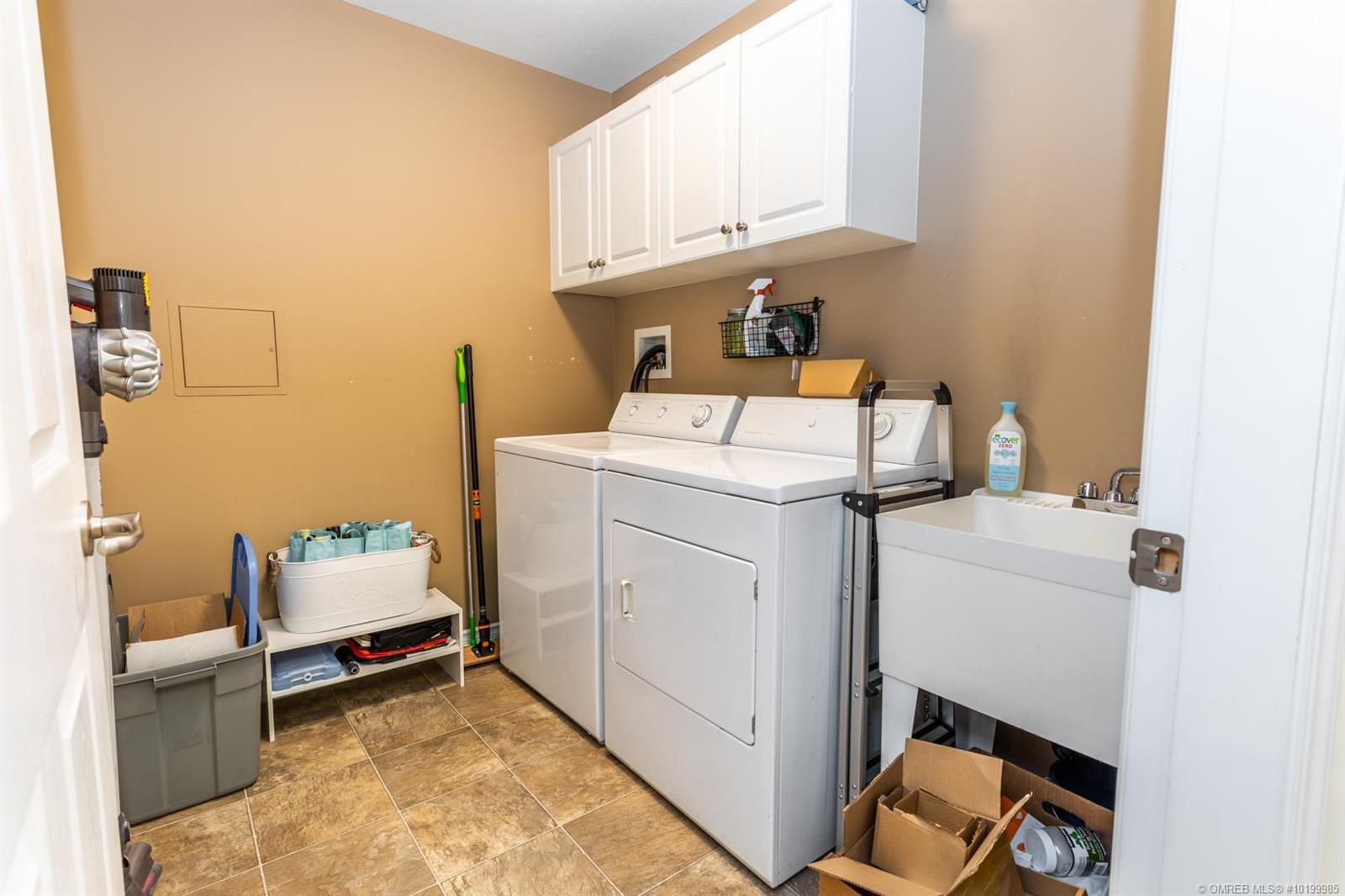
    Along with another full bathroom, this condo comes with a laundry room that is spacious enough to use as storage. Also included is a separate locker room for storage and secured underground parking with security cameras. There are no rental restrictions and one pet (under 20lbs) is allowed. Excellent location with shopping and a bus stop only steps away.

    For more details, please contact Rom Houtstra at 250-317-6405 or email him at rom@romrealty.com.

  • Emigration Expo 2020

    Emigration Expo 2020

    Emigration Expo 2020 in The Netherlands!

    I am excited to share that I will once again have at booth at the Emigration Expo in Europe! This is a great opportunity to go overseas and promote the amazing lifestyle we live here in Kelowna. Do you have a home or business for sale and want to promote it internationally? Contact me today and we can set up a meeting to discuss.

    What is the Emigration Expo?

    The Emigration Expo is held on February 8 and 9, 2020. With about 11,000 visitors, the Emigration Expo is Europe’s largest event for emigrants, expats, job seekers, entrepreneurs and anyone else looking to live abroad. The Emigration Expo is about information, orientation and doing business. There are 3 halls with an area of 12,000m² and about 200 exhibitors and free lectures and presentations. The Emigration Expo is a must for everyone planning to move abroad, temporarily or permanently.

    My sister, Pauline and I, in front of my booth at the Emigration Expo in 2019.

    Do you want a FREE ticket to the Emigration Expo?

    The first 50 people to click here can get a free ticket to the Expo! Let me know if you will be attending, I would love to see you there!  My booth number is #230 in Hall 2.

    Do you want more information for immigration, live and work in Canada? Please fill out the form here and I will contact you shortly.

  • Rom’s Kelowna Real Estate Opinion November 2019

    Rom’s Kelowna Real Estate Opinion November 2019

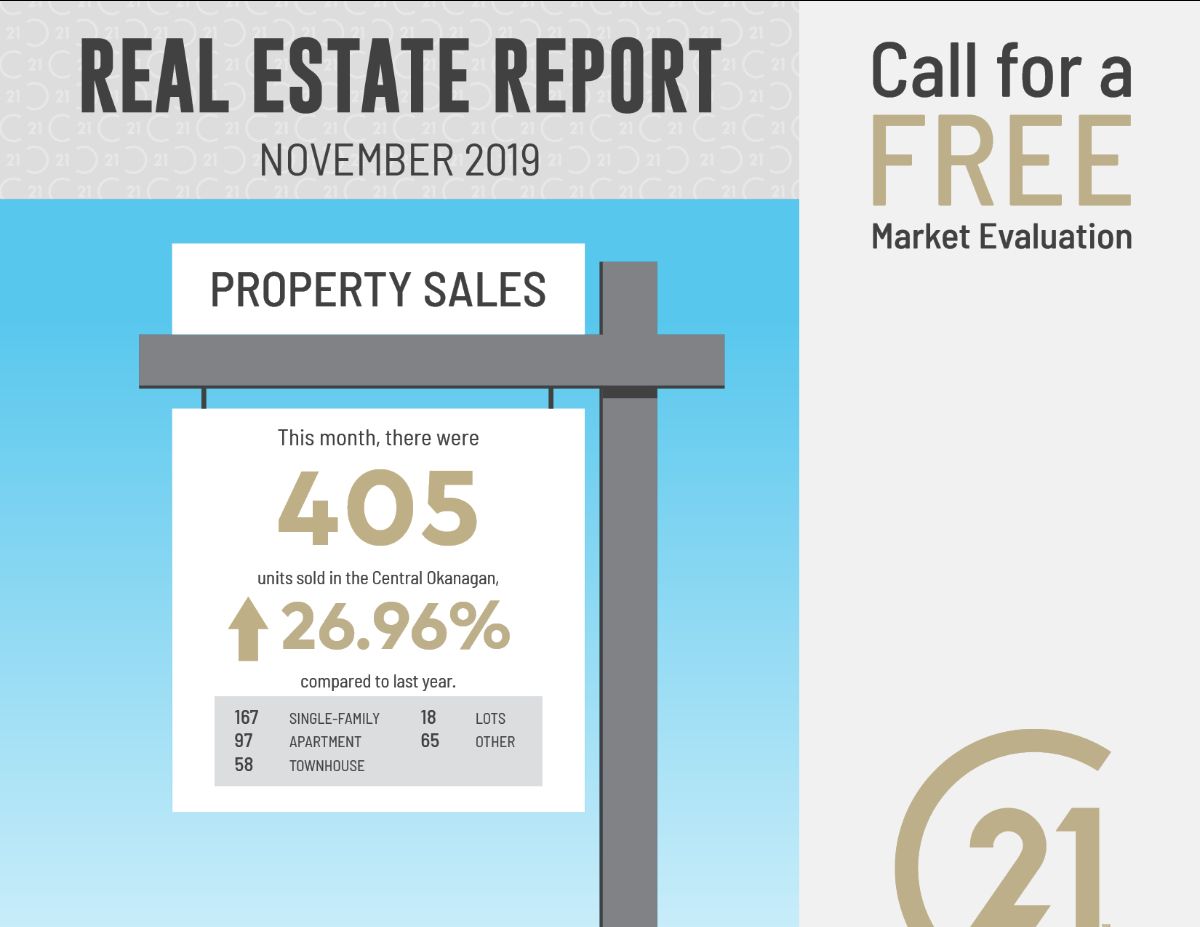
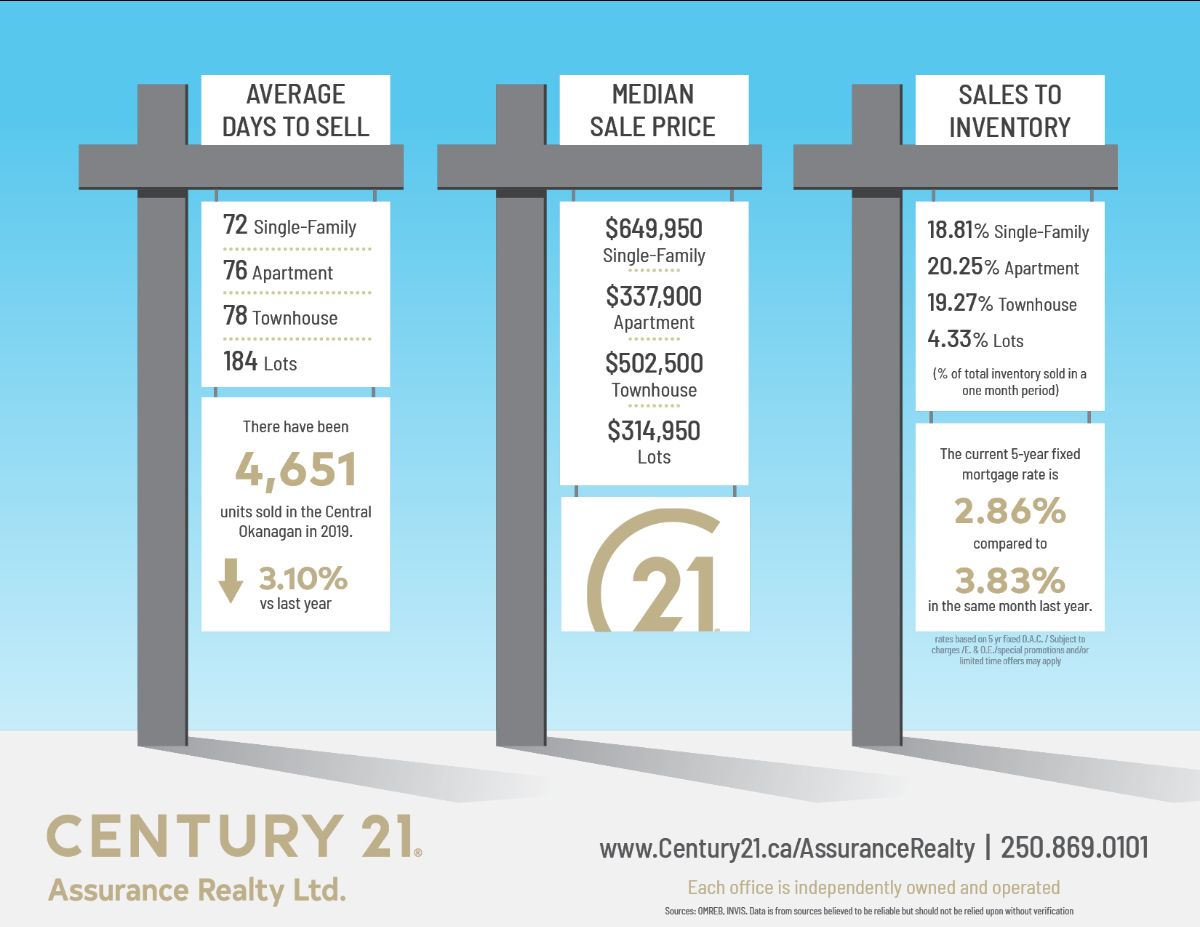
    November 2019 Kelowna Real Estate Report:

    *Click the images to enlarge

    Kelowna Real Estate Opinion for Nov 2019

    We are well into December now and I love to take the time at the end of the year to reflect on the past 12 months. Each year I make predictions about the market for the coming year and I will do that here today for 2020.

    Last December, I predicted a flat market, relatively ‘boring’ with no dramatic rise or fall in any statistic. I called it a soft correction which means it’s a little on the downside but mostly flat. This is exactly what we got in 2019.

    Overall, prices inched down a bit here in the Central Okanagan. I also predicted that inventory would rise slightly, which it did (about 5-10%). Sales were predicted to be flat as well. The absorption rate (% of total residential inventory that sells on a monthly basis), decreased slightly.

    As you can see, for 2019 overall it has been a very flat market. You can view the 12 month comparison of Nov 2018 to Nov 2019 by clicking here: 12 Month Comparison November 2019 (1).

    So, what will happen in 2020?

    Basically, we will see more of the same with one slight change.  The forces driving the market are charging slightly. There is some uncertainty in the US government, Canadian government and the BC government that is keeping consumer confidence down.

    However, banks are counteracting that negativity. Interest rates are historically low again.  The new first time home buyer program (see my blog post here), that rolled out in September is being used aggressively. Big cities like Toronto and Vancouver have gone into the recovery leg of their cycle. We are still influenced by the increased buyer activity from the failing Alberta market and people cashing in from the West Coast.

    In summary, we will see a relatively flat market for 2020. Instead of calling it a soft correction, I will say it will be a soft recovery. Prices, absorption and sales will rise slightly and inventory will remain constant. It will be a good market but nothing spectacular. That is the Real Estate World according to Rom.

    Wishing you and your family a safe and happy holiday season!

  • Rom’s Kelowna Real Estate Opinion for Sept 2019

    Rom’s Kelowna Real Estate Opinion for Sept 2019

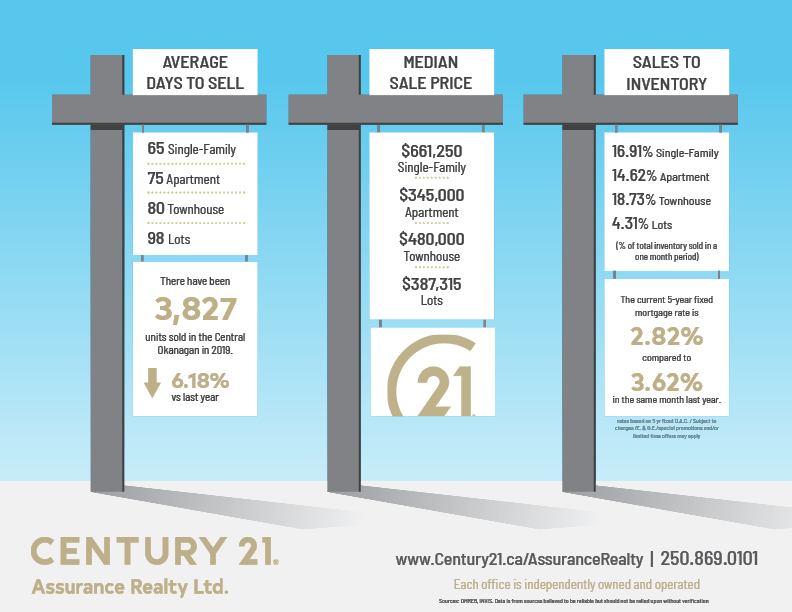
    September 2019 Real Estate Report:

    *Click the images to enlarge

    Kelowna Real Estate Opinion for Sept 2019

    Fall is here and with that brings the falling of leaves, cooler temperatures and a new season of the real estate world. Like I have stated in the last few months, the current market is flat. No exciting rises or bubble bursts and there will be none in the immediate future. Bubbles burst when the market has shot up like a rocket like 2004 to 2007. Markets rise dramatically when the market previously fell off a cliff like in 2009 to 2013. We have nothing like that going on. The market is good; not great, not terrible but good.

    A new report shows disparity in home price trajectories across Canada, including some large decreases. The CENTURY 21 analysis of home prices reveals that some communities have seen some steep decreases in price per square foot in the past year, most notably in British Columbia. Brian Rushton, Executive Vice-President of CENTURY 21 Canada said, “It is not surprising to see Vancouver prices drop so much, but the drop is actually more significant in some Metro Vancouver suburbs like West Vancouver and secondary B.C. markets such as Vernon and Kelowna”.

    While the report is showing prices drop, sales activity is steady. The townhome market under $500,000 continues to be very active. The single family house market is all over the place.  The market for homes over $1 million is very slow right now, with only 3 sold last month.  Condo sales are still strong too but I suspect this market to stabilize within the next 2 years.

    The only insight we can give you is that so far it looks like 2020 will be very similar. There may be a slight increase in the markets in 2020 caused by some of the positive lending changes; lower interest rates, lower qualifying stress test rates and the new first-time buyer incentive program. These programs and changes will allow a small percentage of the population the ability to buy when they could not before the program. Also, the five year bond yields and mortgage rates (yes, there is a correlation there), are back at or have broken levels compared to five years ago.

    As always, this is the Real Estate World according to Rom.
  • Home Buyers note, new mandatory Depreciation Reports for Strata Titled Properties introduced

    Depreciation Reports

    As you may or may not know, the B.C. provincial government has introduced new regulations making depreciation reports mandatory for strata corporations in B.C. commencing January 2014. Strata corporations of less than 5 units will be exempt from the requirements, plus a strata corporation may consider exempting itself by passing a 3/4 vote resolution. A depreciation report is in essence a 20 year maintenance and repair plan and budget for strata titled buildings. It will be more peace of mind for buyers purchasing a condo or town house if such property has completed such a report.  Buyers purchasing strata type properties will be much better informed and the chances of getting hammered with repair bills and therefore imposed levies or increased strata fees to cover these expenses will be substantially decreased.

  • 5 Ways to avoid Investor hell

    5 ways to avoid investor hell

    If there’s one area where savvy real estate investors excel, it’s finding and following through with lucrative deals. The very thought of purchasing a property and turning it into a cash flowing powerhouse is one that entices investors of all levels to get out there and start buying.

    However, as the old adage goes, “All that glisters is not

    gold,” and that is as applicable to real estate investing as it is to other aspects of the business world. There are countless stories out there about investors who ended up getting the short end of the stick in what seemed like a fantastic deal, and lost thousands – and sometimes even millions – of dollars in the process.

    In short, investors need to know how to avoid landing in nightmarish situations, and Tony LeBlanc, owner of Ground Floor Property Management in Moncton, NB, has a Top 5 list of things to avoid.

    Not knowing how much maintenance costs

    Before buying an investment property, buyers must have some basic knowledge on what things costs, he says. We’ve had owners buy properties that needed significant amounts of work to be done. Once the work began, the owners were surprised by the associated costs.

    Not analyzing the numbers properly

    A big mistake I see with a lot of novices investors is the lack of verification of numbers provided by the seller. When buying a property, you should always ask for at least two years’ worth of expenses, examples are heat, electricity, water and sewage and maintenance. As the purchaser, you should pay great attention to all of these details to make sure things look right.

    Security Deposits
    It’s common practice for renters to pay some sort of security deposit when renting an apartment. Each province in Canada has different regulations as to how these security deposits should be handled by the property owner. With a typical purchase and sale agreement, most investors will always ask to have copies of all the current leases. Within the lease itself, there is usually a section to document details about a security deposit. The buyer must be aware of the status and location of all deposits. If the property owner has kept the deposits for himself, these funds should be then given to buyer on closing.

    Financing and knowing what you need to pay
    When buying a rental property, there can be numerous fees from different parties, says LeBlanc. “We had some clients recently close on a 12-unit property and they thought they knew all the fees that they would be charged. After everything was said and done, they ended up paying close to $7,000 more than they thought. This was very frustrating to them as they had to take this money from the reserve fund they had created for the property.”

    Property management
    Most new investors underestimate the time and expertise required to manage a rental property, often times this results in expensive lessons learned, says LeBlanc. One of the most popular issues that new investors struggle to get a hold of is dealing with tenants and the laws the govern tenancies. Before jumping into managing your own properties, be honest with yourself and see if you have the time, money and expertise to self-manage, he says.


    Courtesy of “Canadian Real Estate Wealth Magazine”